




- RDL
RDL – SF-NP35E
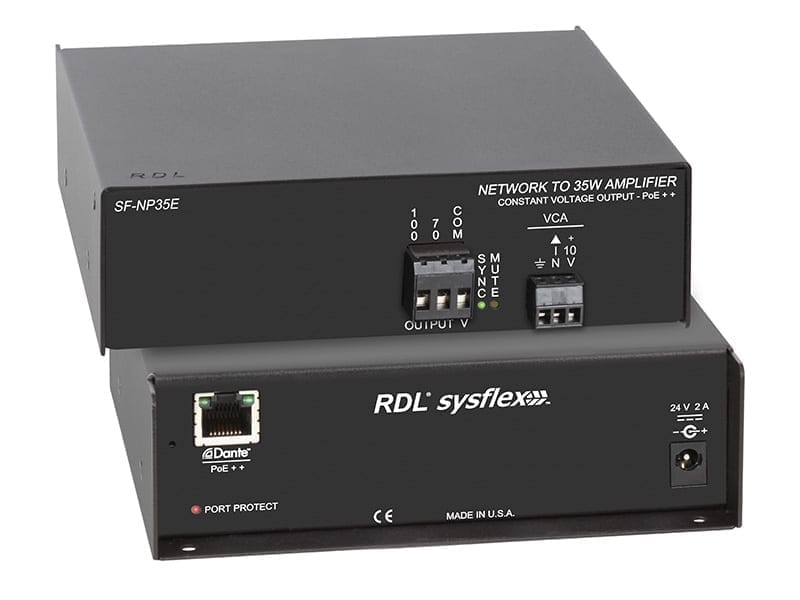
The SF-NP35E is an audio power amplifier that converts one Dante network audio channel to a 70 V or 100 V constant voltage amplified output.
The SF-NP35E is an audio power amplifier that converts one Dante network audio channel to a 70 V or 100 V constant voltage amplified output. The output provides 35 watts for a network digital audio level of 0 dBFS. Special software is not required to configure the module.
The SF-NP35E is equipped to operate from a PoE++ enabled network switch. The SF-NP35E may be powered from an external 24 Vdc power supply, available separately.
If a PoE++ powered device instantaneously demands excessive power from a PoE++ port, that port can shut off its output voltage, causing a prolonged disruption of the device operation. The SF-NP35E monitors the amplifier power and limits the current to protect the PoE++ port against shutting down even during extreme feedback or square wave modulation conditions. A red rear-panel PORT PROTECT LED flashes when the SF-NP35E reduces power consumption to prevent shutdown of the PoE++ port voltage.
The SF-NP35E is equipped with an internal VCA for setting the output level. A detachable terminal block provides for the connection of an external 10 KΩ potentiometer or a 0 to 10 Vdc control voltage. The amplifier gain remains at maximum when the VCA input terminal is not connected. RDL remote controls are available to provide single-turn, multi-turn (rotary encoder) or pushbutton (ramp or fixed level selection) user level control. VCA control insures long term noise-free level adjustment.
The module is equipped with both thermal and output short-circuit protection. The high-efficiency Class D output stage produces minimal heat for all levels of expected voice or music modulation. An LED MUTE indicator glows yellow when the output is muted. Valid synchronization to the Dante network is indicated by a green LED visible from the front of the unit.
The SF-NP35E is constructed in a durable, professional all-metal enclosure suitable for free-standing, surface-mounted or rack-mounted operation. This full-featured SYSFLEX product is engineered and manufactured in the U.S.A for continuous duty in demanding installations. The versatility of SYSFLEX products adds enormous flexibility in the design and installation of professional A/V systems.
Features
- 35 Watts RMS Constant Voltage Amplifier
- 70 V or 100 V Output
- Converts One Dante Network Audio Signal to a Mono Constant Voltage Output
- Selectable Dante Sample Rates: 44.1 kHz, 48 kHz, 88.2 kHz, 96 kHz
- 0 dBFS Input for 35 W Output
- Automatically limits supply current to protect against PoE++ port shutdown
- VCA Control on Detachable Terminal Block
- External Control Using 10 KΩ Potentiometer or 0 to 10 Vdc
- Compatible with RDL Remote Level Controls
- Special Software Not Required for Module Setup
- LED Indicator for Network Sync
- High-Efficiency Class D Operation
- Thermal and Short-Circuit Protection
- Plenum Rated per UL 2043 Standard
- Amplifiers
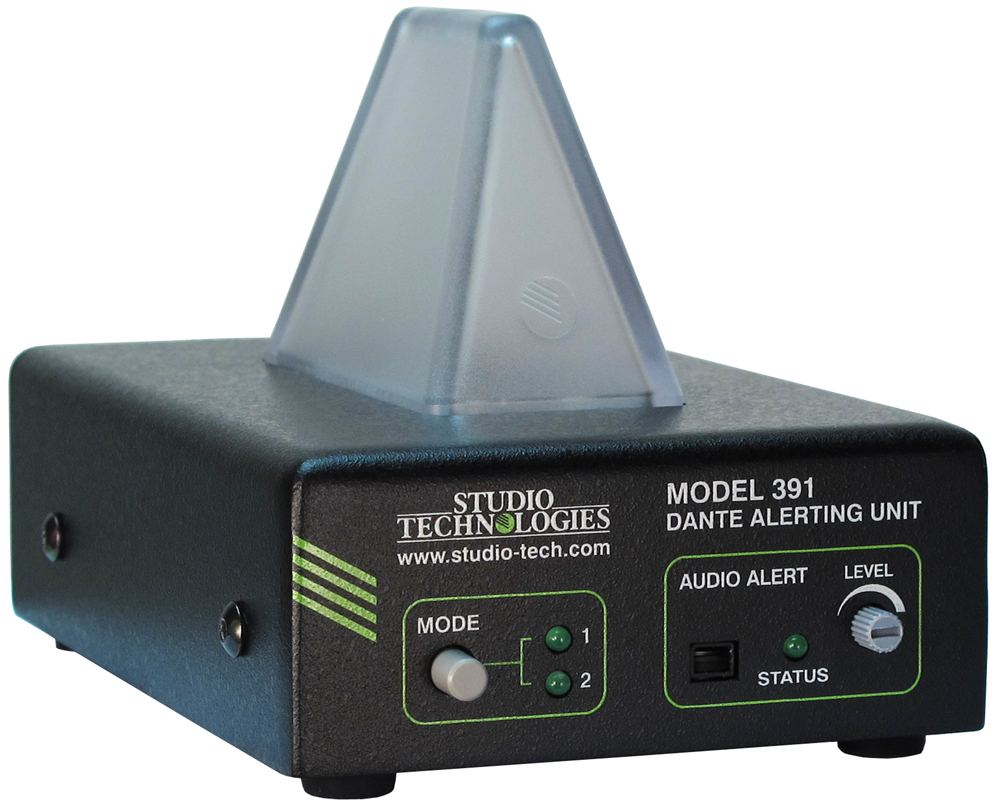
 The Model 391 Dante Alerting Unit builds on the limited capabilities of the "beacon" or a "strobe" devices that are ubiquitous with analog party-line (PL) intercom systems and adds a broad range of new and enhanced features. The Model 391 will respond to 20 kHz tone "call" signals that are commonly utilized in both legacy analog and modern digital party-line intercom circuits. Upon detecting a call signal the Model 391 can provide a visual indicator, enable an audible "buzzer" output, and even activate an analog line output. Each of the Model 391's alerting resources can be individually optimized to meet the unique requirements of many applications. The STcontroller personal computer application is used to select from a wide range of operating choices. The compact, portable unit is compatible with Dante audio-over-Ethernet installations and requires only an Ethernet connection with Power-over-Ethernet (PoE) capabilities for operation. Typical Model 391 applications will include use in theaters, sports facilities, corporate events, and broadcast studios.
Key Features
The Model 391 Dante Alerting Unit builds on the limited capabilities of the "beacon" or a "strobe" devices that are ubiquitous with analog party-line (PL) intercom systems and adds a broad range of new and enhanced features. The Model 391 will respond to 20 kHz tone "call" signals that are commonly utilized in both legacy analog and modern digital party-line intercom circuits. Upon detecting a call signal the Model 391 can provide a visual indicator, enable an audible "buzzer" output, and even activate an analog line output. Each of the Model 391's alerting resources can be individually optimized to meet the unique requirements of many applications. The STcontroller personal computer application is used to select from a wide range of operating choices. The compact, portable unit is compatible with Dante audio-over-Ethernet installations and requires only an Ethernet connection with Power-over-Ethernet (PoE) capabilities for operation. Typical Model 391 applications will include use in theaters, sports facilities, corporate events, and broadcast studios.
Key Features