Dante-enabled Product Catalog
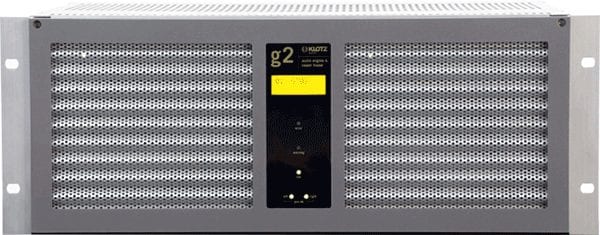
The G2 audio engine hosts a DSP farm powerful enough for 32 equalizers, 32 dynamics, up to 256 mixing channels and a 64 x 64 mix minus matrix.
The G2 audio engine hosts a DSP farm powerful enough for 32 equalizers, 32 dynamics, up to 256 mixing channels and a 64 x 64 mix minus matrix. 21 plug-in positions can be equipped with analogue and digital interface cards, fiber optic transceivers and MADI cards. Audio-over-IP interface cards for DANTE-protocol (trademark registered for Audinate Pty Ltd) and Ethernet AVB will be available shortly.
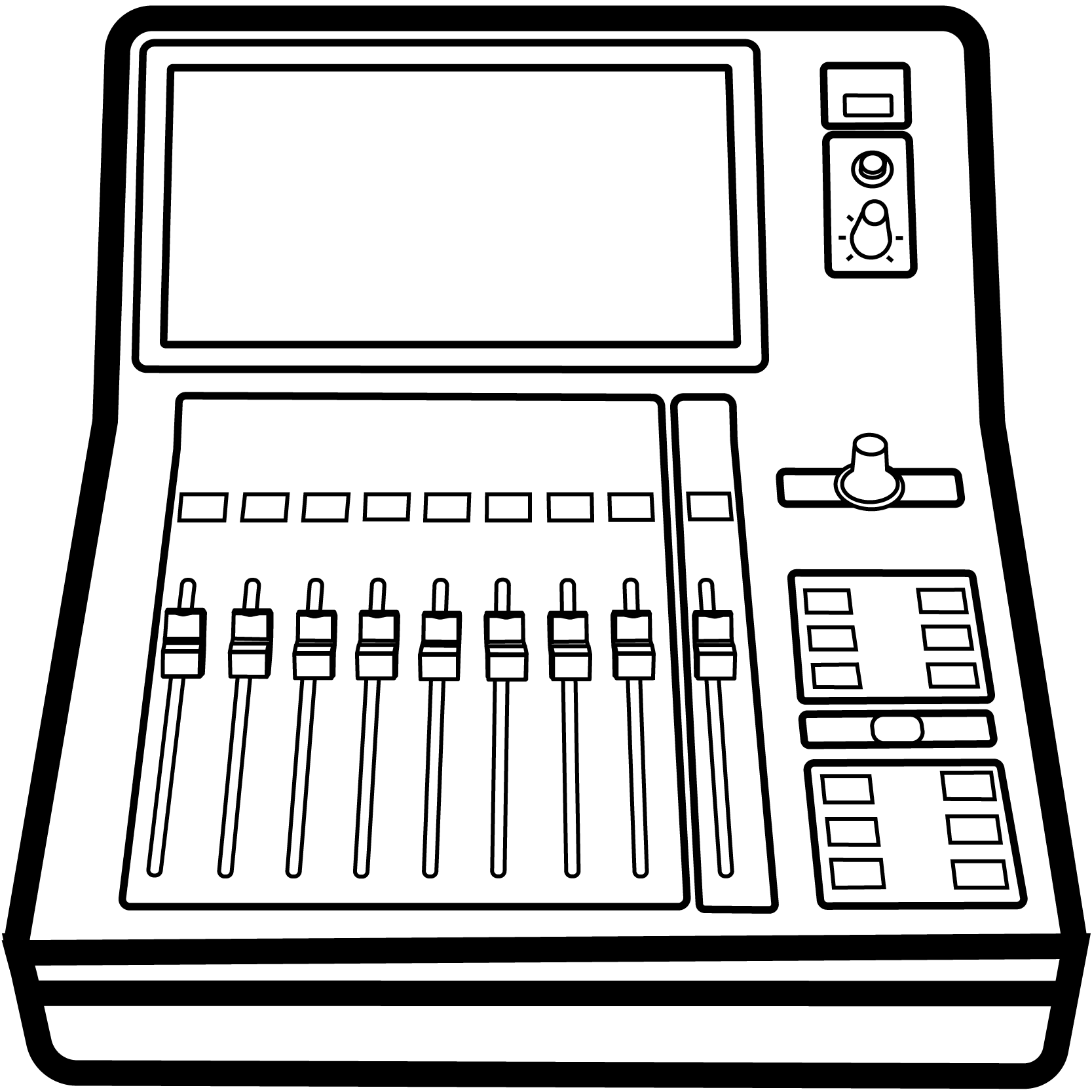
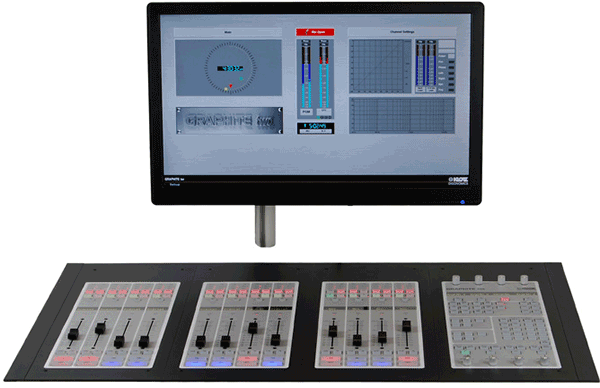
GRAPHITE TWO consoles are extremely versatile as they can be configured either as stand-alone or as networking consoles.
GRAPHITE TWO consoles are extremely versatile as they can be configured either as stand-alone or as networking consoles. The fully modular design allows configuring mixing consoles from 8 to 32 faders - up to 640 input and 640 output channels. Many features can be programmed individually by the customer such as monitor feeds, GPIs and GPOs, sources and busses and logic commands. The control surfaces are connected by either IPX/SPX or TPC/IP protocol to the G2 audio engines and routers and can share all sources and outputs within the audio network. Using the IPX/SPX protocol interface, GRAPHITE TWO consoles are an ideal option to upgrade existing VADIS* system installations as they are fiully VADIS* compatible.
A unique feature is the option to install a break-in / break-out unit within the console frame. The interface unit is fitted with 8 audio input channels which can be configured either as stereo or mono inputs and outputs. The interface unit uses a Dante protocol-based Ethernet connection to the main frame which can be located in the main control room (MCR).
GRAPHITE consoles offer a range of features that can be configured via the GRAPHITE configuration tool. Users can define presets for audio settings, function keys for GPIO and other control features, external sources for control room and studio monitoring, and snapshot keys to store the entire console set-ups.
- Personal Mixing & Monitoring