Product Information
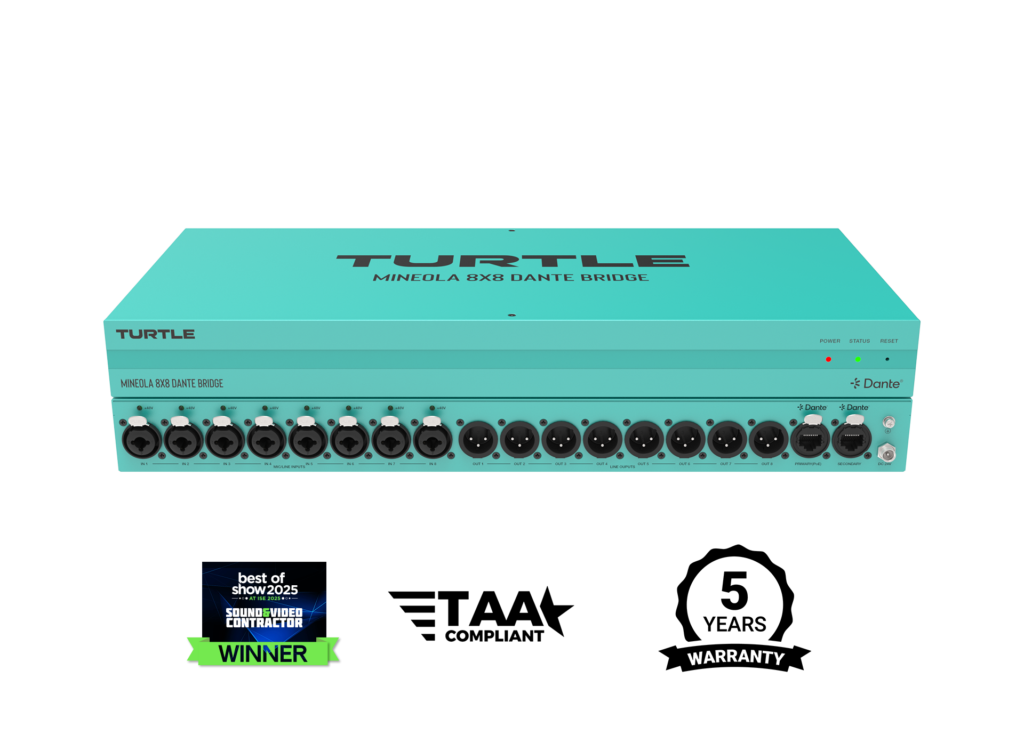
DPanel 系列墙面接口机,其拥有模拟输入和 Dante 数字输入,模拟线路输出和 Dante 数字输出,模拟输入支持幻象供电以及手动前级增益调节。

DPanel 系列墙面接口机,其拥有模拟输入和 Dante 数字输入,模拟线路输出和 Dante 数字输出,模拟输入支持幻象供电以及手动前级增益调节。
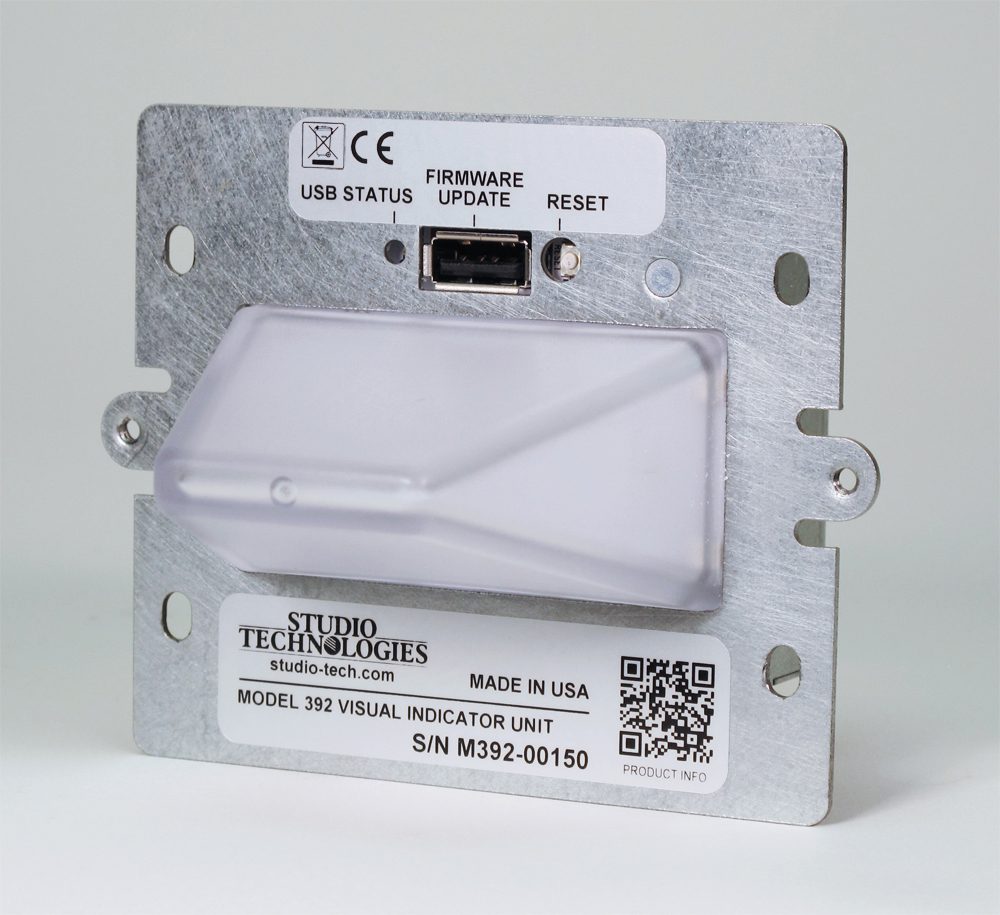
The Model 392 is designed for a variety of applications that require a visual status indicator. An array of red/green/blue (RGB) LEDs provide backlighting for a distinctively shaped polycarbonate (plastic) lens assembly. The Model 392 can serve as a broadcast "on-air" light, a room occupied display, or an intercom call signal indicator. In addition, the unit can serve as an audio level display, with a green, yellow, and red indication of audio level. Full operation requires only a Power-over-Ethernet (PoE) 100 Mb/s data connection. It's compatible with the popular Dante® audio-over-Ethernet protocol but offers support for a range of additional applications. Configuration is performed using the Studio Technologies' STcontroller software application. Selected configuration values are stored within the Model 392's non-volatile memory. A variety of methods are provided to allow control of the Model 392's LED array. These include using STcontroller's "virtual" button, receiving network-transported UDP commands, and responding to an audio signal level associated with a Dante digital audio connection.
Key Features
Dante audio-over-Ethernet technology
General-purpose visual indicator with RGB LEDs
On, flashing, and audio level displays
Responds to high-frequency (18-23 kHz) call, UDP commands, and PCM audio data
Mounts in a US-standard 2-gang electrical box
Single Decora-style lens opening dimensions
Configured using STcontroller application
Power-over-Ethernet (PoE) powered
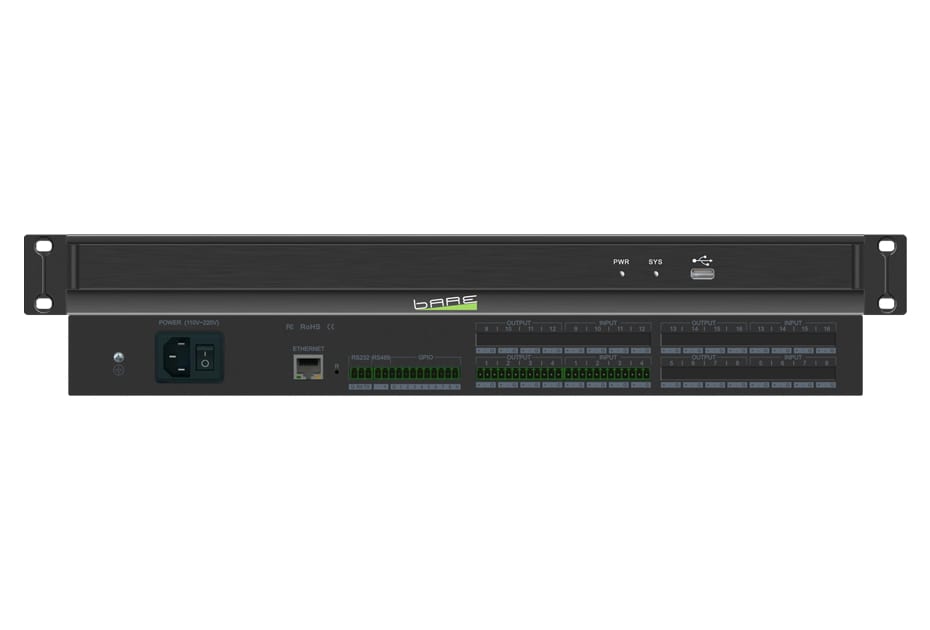
BR-104S digital audio processor is an audio processing and control system that can be freely designed. It uses advanced DSP processing technology and has a new algorithm of automatic mixing and feedback cancellation, which can solve various practical problems in application scenarios. Since most of the controls are operated by software, the appearance is more concise and lively. The operator only needs to click the mouse lightly, instead of adjusting complex large-scale mixers on the spot to complete the function conversion as before, which greatly simplifies the operation.