
Mansion – DIC4E43A


More details

Similar Products

attero-tech-synapse-D16Mio|attero-tech-synapse-D16Mio
  • Attero Tech by Q-SYS

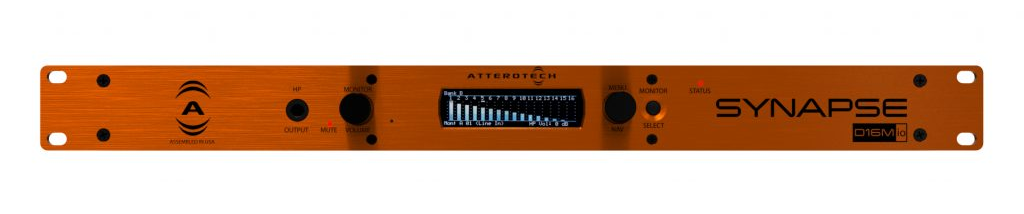
Attero Tech by Q-SYS – Synapse D16Mio

The Synapse D16Mio is a 16 Channel I/O 1RU Dante™ / AES67 interface. Features
  • 16 studio-grade mic preamps with line level capability as well
  • Front panel network control of mic preamp gain, phantom power, mic/line input sensitivity
  • 16 line level balanced outputs with front panel or network level control
  • Useful for studio, live, rental and fixed installations requiring high numbers of high quality audio I/O
  • Supports Dante™-AES67 Interoperablity Mode
  • 16/24 bit, 44.1/48/88.2/96 kHz analog to Dante™ conversion
  • Easily assignable front panel headphone access, volume control and source selection - includes local input and Dante™ monitoring modes
  • Integrated power supply with optional external supply for applications  requiring redundant power requirements
  • Integrated SFP ports for direct connection to fiber for long haul signal extension applications
    I/O Interfaces
  • Dante Ch: 16x16
  • 16-bit, 24-bit
dbt-44-front-5hr
  • Synq

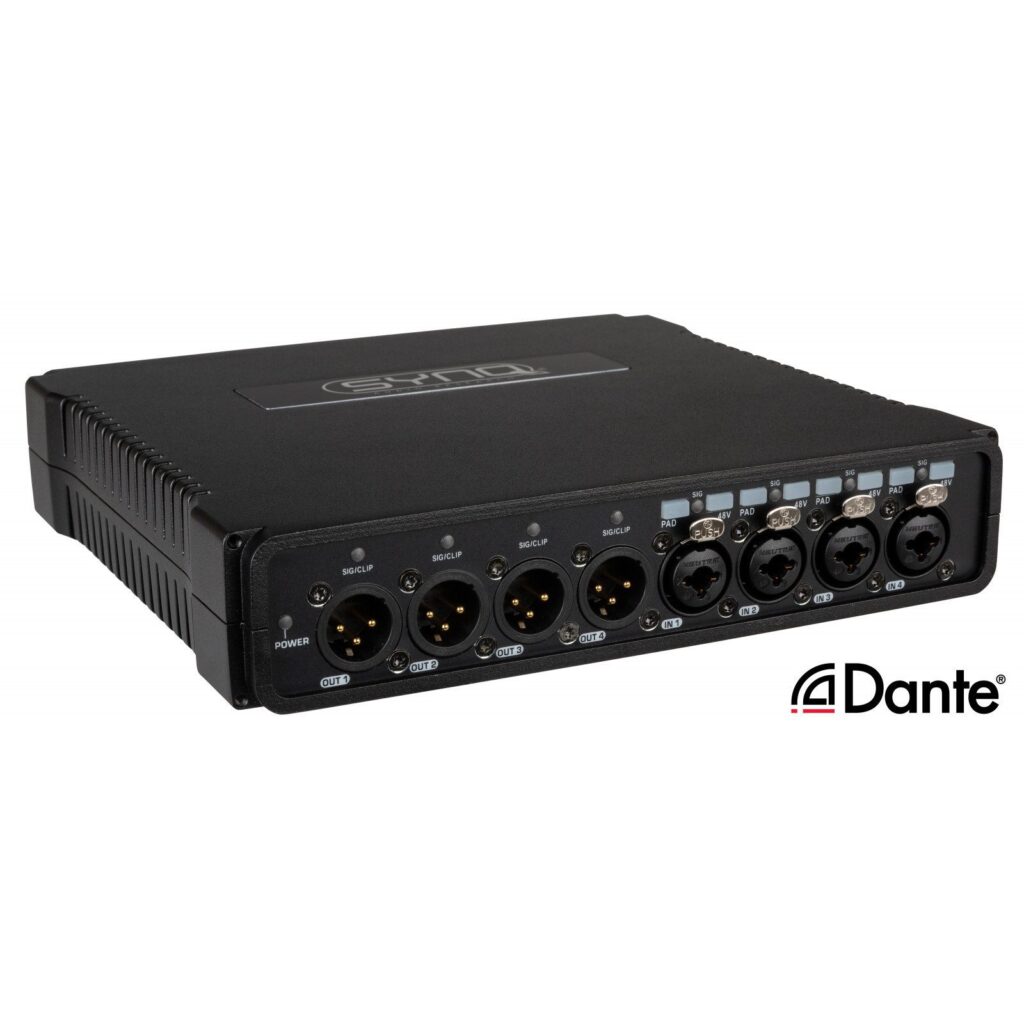
Synq – DBT-44

Top quality bidirectional conversion between DANTE® and 4 hi-grade balanced analog in/outputs. GIGABIT Ethernet I/O, no linking delays. Built-in DSP AUDIO PROCESSING (parametric EQs, compressors, delays, ...) AUDIO MATRIX: flexible routing, ... WEB SERVER with graphical DSP user interface. Extremely high audio quality: S/N >120dB ~ THD: <0.003% RENTAL version: 4 XLR line/mic inputs + 4 XLR-line outputs POWER: PowerCON TRUE1 (100V-240Vac) or PoE class 0 2 units fit together in a 1U 19"rack
    I/O Interfaces
2017324145027
  • BARE

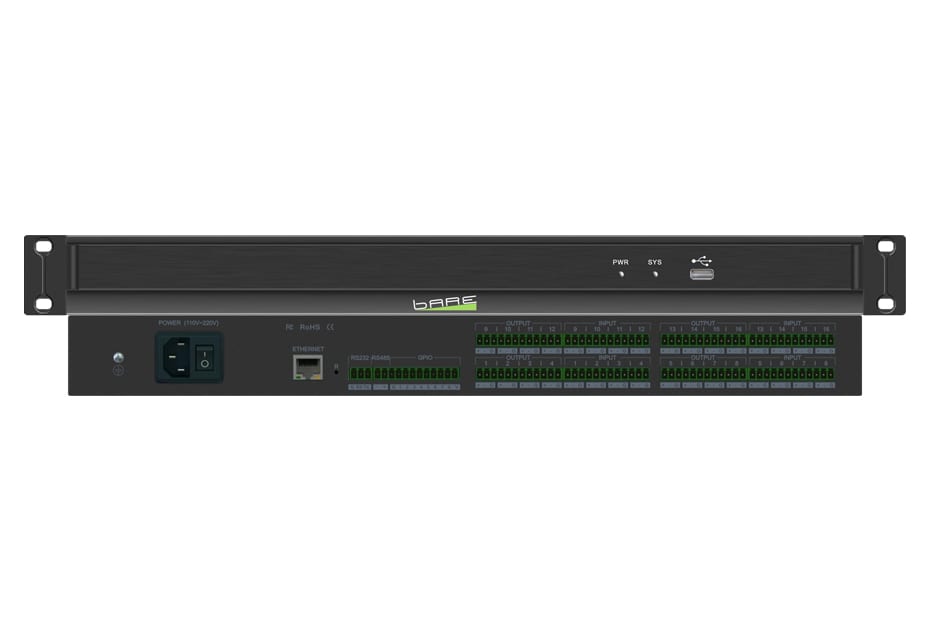
BARE – BR-106S

The BR-106S network audio processor is an audio processing and control system that can be freely designed. It uses advanced DSP processing technology and has a new algorithm of automatic mixing and feedback cancellation, which can solve various practical problems in application scenarios. Since most of the controls are operated by software, the appearance is more concise and lively. The operator only needs to click the mouse lightly, instead of adjusting complex large-scale mixers on the spot to complete the function conversion as before, which greatly simplifies the operation.

    I/O Interfaces